
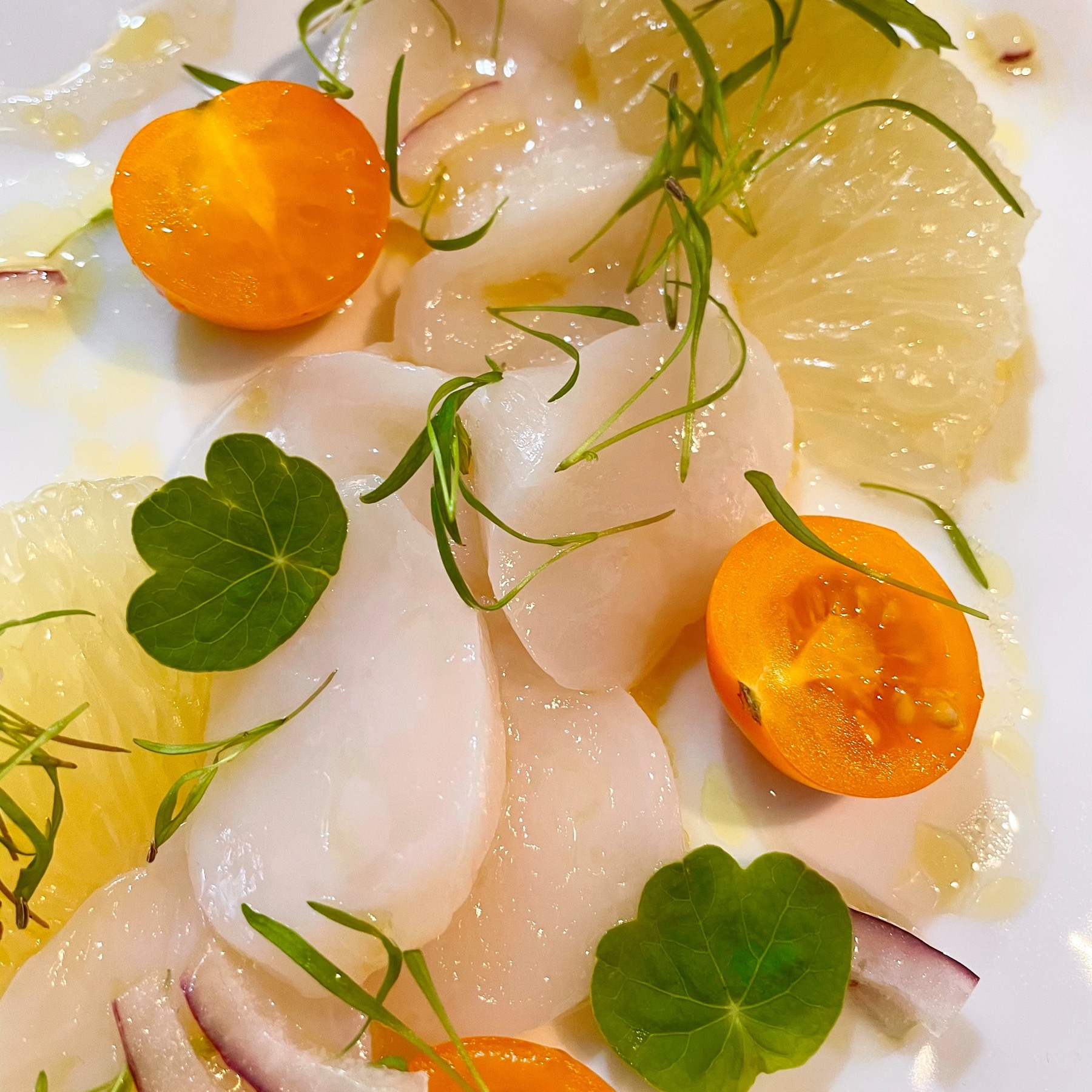
How to Get a Perfect Sear on Scallops
A practical kitchen note from the marketing archive: dry scallops, high heat, enough space in the pan, and one confident flip.
2023-05 · 2 min read
Great scallops do not need much help. They need dry surface, high heat, and a cook who resists the urge to keep moving them around.
The goal is simple: a deep brown crust outside, a barely translucent center inside, and the natural sweetness of the scallop still intact.
Start With Dry Scallops
Moisture is the enemy of browning. Pat the scallops thoroughly with paper towels before they go near the pan. If they still feel wet, give them another minute on a towel while the pan heats.
Season both sides with salt. Letting the scallops sit for a few minutes after salting helps draw out surface moisture, which you can blot away before cooking.
Use a Hot Pan
Stainless steel and cast iron both work well because they hold heat. Set the pan over high heat until it is properly hot, then add a high-heat oil such as grapeseed or refined avocado oil.
Wait until the oil shimmers. If the scallops hit a lukewarm pan, they steam before they sear.
Give Them Space
Set the scallops in a single layer with room between each one. Crowding drops the pan temperature and traps steam, which makes the crust pale and soft.
If the pan is not large enough, cook in batches. A small batch with good browning beats a full pan of steamed scallops every time.
Flip Once
Once the scallops are down, leave them alone for 2 to 3 minutes. The crust forms because the scallop stays in contact with the pan.
Flip only when the first side is deeply browned and releases easily. Use tongs rather than a fork so the scallop stays intact and keeps its juices.
Cook the second side for about 2 minutes. The exact timing depends on size, but the center should still look slightly translucent when cut.
Rest Briefly
Move the scallops to a plate and let them rest for 1 to 2 minutes. The carryover heat finishes the center without pushing the texture into rubbery territory.
Serve immediately with bright, simple flavors: lemon, herbs, butter, spring peas, celery, or a clean herb oil. The scallop should still be the main event.