Buying
Guide.
How to shop for seafood like a fisherman. What to ask, what to skip, and how to read a label that's designed not to be read.
~30%
of seafood at U.S. retail is mislabeled — wrong species, wrong origin, or both. Knowing what to look for is your first defense.
Five questions to ask before you buy
If a fishmonger or website can answer all five, you're in good hands. If they can't answer two, walk away.
Species?
Latin name, not "white fish." If they can't say *Hippoglossus stenolepis*, it might not be halibut.
Wild or farmed?
"Atlantic salmon" is always farmed. "Wild Alaska" is the real label. Color is dyed, not grown.
Where caught?
A specific FAO region or fishery — not "Pacific Ocean." "Bristol Bay sockeye" is an answer; "Pacific salmon" is not.
Which gear?
Longline, troll, gillnet, jig, pot. Selective gear correlates with quality and lower bycatch.
When?
Harvest date, not "fresh." Frozen-at-sea three weeks ago beats "fresh" that's been on ice for ten days.
Wild vs. Farmed
Both can be done well. Most aren't. The difference comes down to what the fish ate, where it lived, and what you're paying for.
Pacific Cloud only sells wild. We're not anti-farming — we're anti-misleading. If a label hides which one you're getting, that's the problem.
Caught in the ocean
- ✓ Migratory diet — krill, herring, plankton
- ✓ Higher omega-3 from natural diet
- ✓ Color is from food, not feed dye
- ✓ Seasonal, finite, more expensive
- ✓ Lower fat, firmer texture
Raised in pens or tanks
- · Engineered feed, often soy/grain-based
- · Color additives standard for salmon
- · Year-round availability, lower cost
- · Higher fat, softer texture
- · Open-pen ops can pollute wild stocks
Atlantic salmon = always farmed · Pacific salmon (king/sockeye/coho/keta/pink) = always wild
Reading a label that wasn't written for you
"Fresh"
Means "never frozen." Doesn't mean recent. Many "fresh" fillets at the counter are 7–10 days from the boat. Frozen-at-sea is fresher than "fresh."
"Pacific snapper"
Almost always rockfish. Real red snapper is Atlantic. Not a problem in itself — rockfish is delicious — but it's a sign the seller is okay with looser truth.
"Wet-packed scallops"
Soaked in STP — sodium tripolyphosphate — to absorb water and weight. They steam instead of sear. Look for "dry-packed" or "chemical-free."
"FAS" or "FAB"
Frozen At Sea / Frozen At Boat. Locks in quality within hours of harvest. The single best signal of seafood quality on a label.
Vessel name + harvest date
"F/V Current Harvester · Aug 12, 2026 · Kodiak Gulf." When a label tells you the boat and the day, the rest of the story is usually true too.
GDST data on package
A QR code or lot number tied to a verifiable harvest event. The new floor for serious traceability — what FSMA 204 will eventually require everywhere.
The freshness checklist
Use your eyes, your nose, and your fingers. Ten seconds per fillet.
Smells like the ocean
Clean, briny, neutral. "Fishy" smell is age. Walk away.
Flesh springs back
Press gently — a fresh fillet rebounds. A dent that stays is a fillet that's gone.
Translucent, not opaque
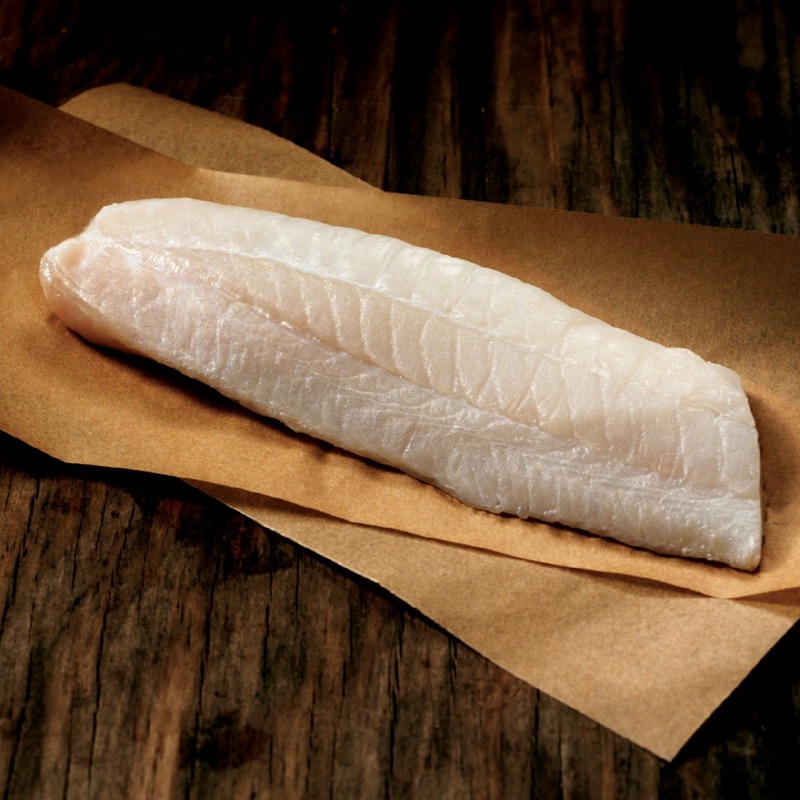
Raw fish should glow slightly. Chalky, dry, or yellowing edges mean it's been there too long.
Whole fish: clear eyes, red gills
Cloudy eyes and brown gills = past its prime. Scales should still be tight to the skin.
No standing liquid in the tray
Pooled milky liquid is melted cell water — a sign of repeated freeze/thaw or bruising.
Time to put it to work
Browse partners we've vetted, or jump to the species guide and pick your fish.